

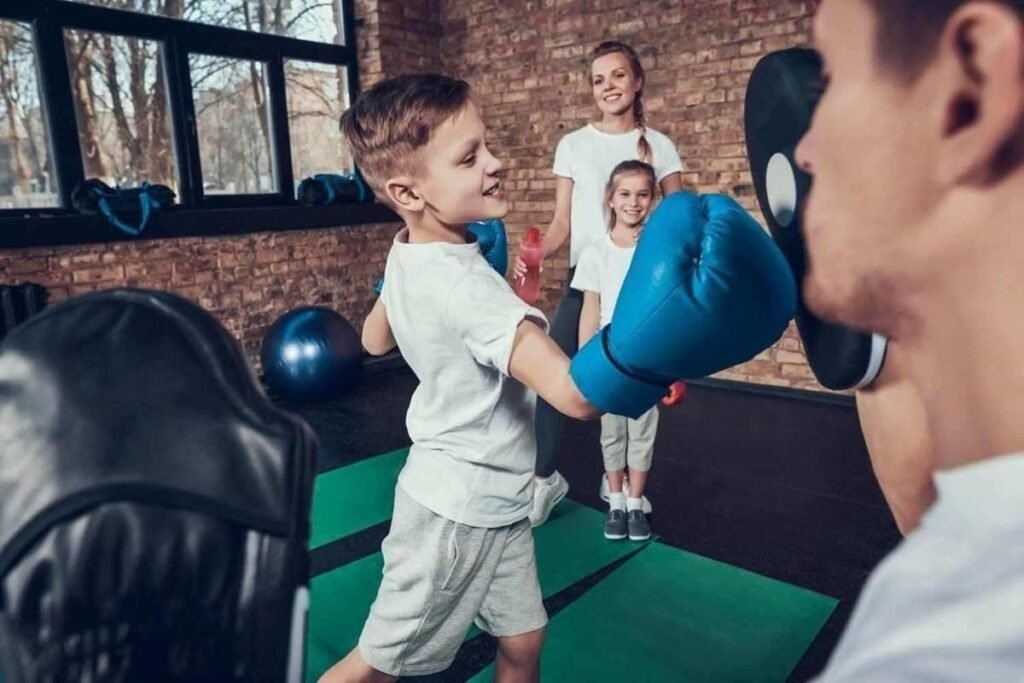
Youth Boxing Classes build functional physical strength, core stability, and cardiovascular endurance by utilizing bodyweight mechanics, heavy bag training, and structured footwork drills. Developing proper striking technique engages the kinetic chain from feet to knuckles, fostering balanced muscle growth and athletic confidence in developing children.
Biomechanical Principles of Youth Striking and Strength Development
Developing total-body functional strength in young athletes requires training movements rather than isolated muscle groups. Enrolling youth in structured Boxing Classes introduces them to kinetic chain power transfer, where force originates in the lower body, shifts through core rotation, and terminates in controlled arm extension. This movement pattern forces the neuromuscular system to recruit fast-twitch muscle fibers, enhancing power output while conditioning joints and connective tissue against physical stress.
Unlike traditional resistance training, youth striking protocols rely primarily on kinetic feedback and controlled bodyweight resistance. Children participating in structured workouts at a specialized youth boxing gym develop rotational core strength through jab-cross combinations and hook mechanics. Repeated rotational movements strengthen the internal and external obliques, transverse abdominis, and erector spinae, creating a solid spinal shield that helps build a confident mind while reducing injury risk in other youth sports.
Footwork mechanics form the foundation of effective striking and lower-body strength conditioning. Shifting weight between stance angles, executing rapid pivot turns, and maintaining balanced athletic positioning force the quadriceps, hamstrings, and calves to work continuously under pressure. Parents researching local boxing classes near me often find that footwork conditioning provides an exceptional cardiovascular and muscular endurance stimulus, conditioning the lower limbs without exposing growing growth plates to excessive external weights.
Physical Adaptations and Neuromuscular Coordination in Children
Youth physical development hinges on stimulating neuromuscular coordination during crucial growth windows. Structured athletic training at a dedicated boxing gym near me introduces children to complex bilateral motor patterns through structured kids fitness classes that challenge brain-body connectivity. Executing a combination while maintaining defensive hand position requires rapid cognitive processing, spatial awareness, and precise hand-eye coordination that transfers directly into daily physical activities.
Cardiovascular and metabolic adaptations occur rapidly when children participate in interval-based striking drills. Heavy bag work and mitt routines operate on high-intensity interval structures, alternating intense exertion bursts with brief active recovery periods. Enrolling youth in specialized Boxing Classes builds heart muscle capacity, improves stroke volume, and increases aerobic threshold, helping children maintain high energy levels while managing fatigue effectively during demanding school days.
-
Upper Body Conditioning: Heavy bag resistance and speed bag work build endurance in the deltoids, pectorals, and triceps without applying compression forces to spine vertebrae.
-
Rotational Core Stability: Constant twisting mechanics during punching drills strengthen abdominal walls and lower back muscles, enhancing overall posture.
-
Dynamic Balance and Agility: Continuous movement on foot pads forces stabilizer muscles in the ankles and knees to adapt quickly to rapid direction changes.
Selecting accredited facilities for structured boxing training near me ensures that young participants learn proper punch mechanics under qualified supervision. Working alongside a dedicated personal trainer for kids enforces strict form guidelines that protect wrist joints and shoulder sockets during impact training. Finding well-maintained boxing gyms near me guarantees access to age-appropriate heavy bags, padded floor spaces, and properly sized protective gloves designed specifically for developing hands.
Regular attendance at specialized boxing gyms provides a controlled outlet for physical stress and built-up energy. Dynamic group workouts combine physical exertion with mental discipline, teaching young athletes to remain calm under physical fatigue while developing healthy bodies. Exploring local boxing lessons near me helps parents locate structured youth programs that prioritize technical skill acquisition, balance control, and athletic confidence over contact sparring.
Long-Term Health Benefits and Injury Prevention Mechanisms
Consistent engagement in structured athletic conditioning lays the baseline for lifelong physical health and body composition management. Children who attend regular Boxing Classes build lean muscle mass while elevating resting metabolic rates, helping maintain healthy weight ratios naturally. The combination of intense calisthenics, jump rope routines, and heavy bag striking creates an efficient calorie-burning environment that prevents sedentary lifestyle risks.
Developing strong tendon attachment points and high bone mineral density represents a vital benefit of impact-based training. Repeated light striking contact against padded surfaces sends mechanical signals through bone structures, encouraging osteoblast activity and strengthening skeletal framework integrity. Children receiving guided cardio and agility training in established boxing near me locations construct durable musculoskeletal foundations that shield them from common overuse injuries in youth sports.
Establishing consistent training habits encourages long-term discipline, body awareness, and physical self-regulation. Enrolling children in high-quality Boxing Classes teaches them how to set realistic fitness goals, track incremental performance gains, and respect their body limits. These foundational movement skills form an athletic toolkit that supports participation in multiple sports, active hobbies, and healthy lifestyle choices well into adulthood.
Real-World Application: Youth Physical Development Case Study
A youth sports performance clinic monitored 75 children aged nine to thirteen over a 16-week conditioning period to measure physical strength and motor control adaptations. Participants attended structured non-contact striking classes three times per week, utilizing heavy bag combinations, agility ladder drills, and bodyweight conditioning. Baseline testing evaluated core plank hold duration, standing broad jump distance, and upper-body push-up capacity prior to beginning the program.
Post-program evaluations revealed measurable strength and balance gains across all age cohorts. Average plank hold times increased by 44 percent, demonstrating significant improvements in rotational core stability. Standing broad jump distance improved by an average of 12 inches, reflecting enhanced lower-body power transfer through the kinetic chain. Furthermore, participant push-up counts increased by 52 percent without adding external weights, proving that structured striking drills build functional upper-body strength effectively in youth athletes.
People Also Ask (PAA)
How do boxing classes build physical strength in children?
Boxing classes build youth strength by utilizing rotational core mechanics, bodyweight resistance, heavy bag impact work, and dynamic footwork drills that recruit total-body muscle fibers without heavy weights.
Are boxing classes safe for active young kids?
Yes, youth boxing classes are extremely safe when focused on non-contact technical drills, heavy bag conditioning, and footwork agility supervised by certified youth coaches using protective gear.
At what age can children start taking boxing classes?
Children can safely start taking non-contact boxing classes around age seven or eight, when their motor control and cognitive ability allow them to follow structured movement instructions safely.
Do children spar in beginner boxing classes?
No, beginner youth boxing classes focus entirely on fitness, technique, mitt work, heavy bag routines, and footwork, excluding contact sparring to prioritize safety and physical development.
How often should kids attend boxing classes for strength gains?
Children achieve optimal strength gains and athletic skill development by attending structured boxing classes two to three times per week, allowing adequate rest between workout sessions.